
Grainger County Criminal Court Cases
Grainger County sits in Tennessee's Fourth Judicial District. Criminal Court hears felony prosecutions, while General Sessions handles misdemeanors within its authority and the early stages of felony matters. A felony may first appear in General Sessions for an initial hearing, then move to Criminal Court after indictment or bind-over. Bean Station City Court and Rutledge City Court keep separate municipal and traffic dockets. Those city files do not amount to a full Grainger County criminal case search.
The Circuit Court Clerk is the main verified custodian for Grainger County trial case files. The clerk keeps dockets, orders, judgments, court costs, and sentence records. Arrest reports remain with the arresting agency, and prosecution files remain distinct from the clerk's public docket. When the question is whether a charge was dismissed, resolved by plea, tried, or sentenced, the signed court record carries the answer.
Grainger Court Counter Workflow
No verified public Grainger County trial-case portal exposes a searchable local docket. Contact the Circuit Court Clerk at 270 Justice Center Drive, Rutledge, Tennessee 37861, by phone at 865-828-3605 or email at sherry.clifton@tncourts.gov. Give the defendant's full name, an approximate filing or arrest date, and a case number when known. Ask which court division holds the matter, what years are electronic, and whether the docket or requested copies can be sent remotely.
The Grainger Circuit Court Clerk site shows the local court channel used for calendars, forms, and payment links.
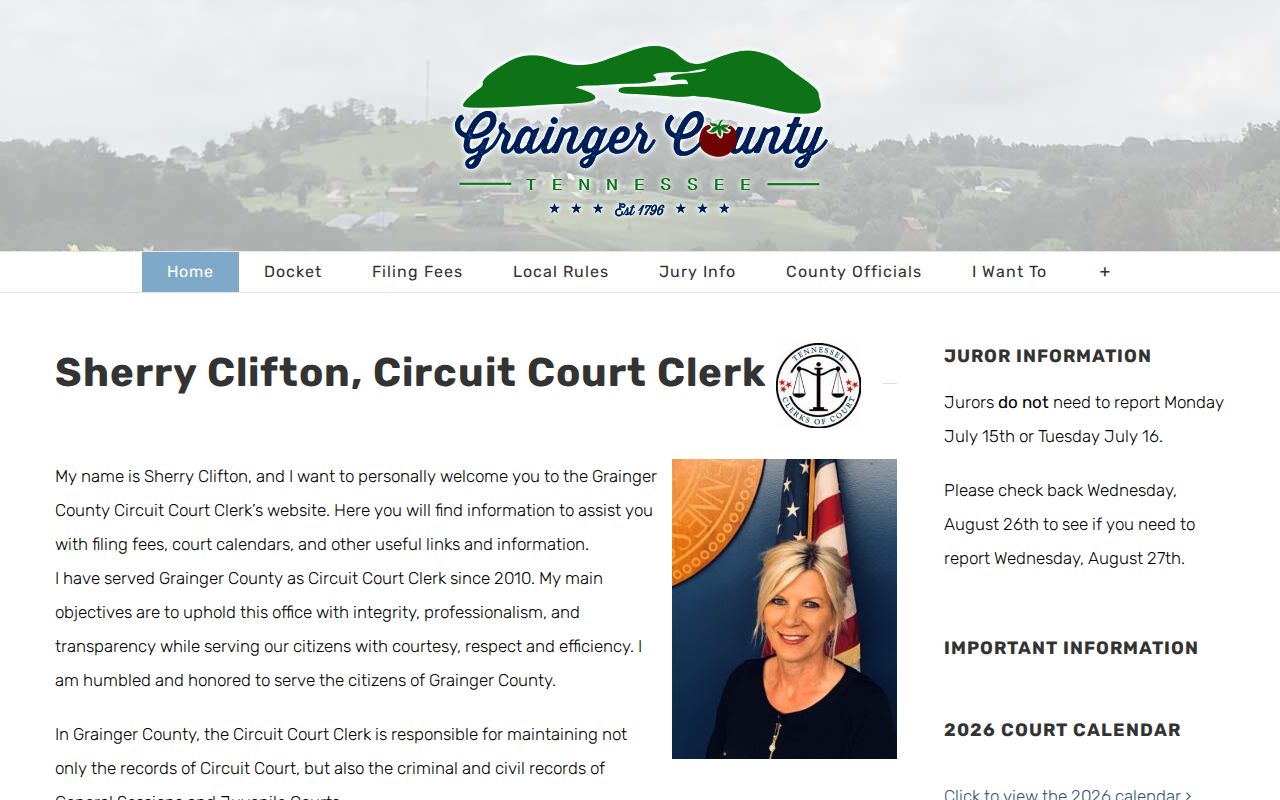
The image helps identify the official clerk site, but its payment and calendar tools should not be mistaken for a complete name-based case index.
Official sources also list the courthouse at 8095 Rutledge Pike while placing the operating clerk at the Justice Center. That address split can send a visitor to the wrong counter. Call before traveling, confirm where the file can be inspected, and ask whether certification must be requested in advance.
Searching Grainger County Case Records
A useful Grainger County criminal case search begins with the most precise identifier available. A case number is best, but a full legal name and a narrow date range can help the clerk separate similar names. Request the docket or case summary first. It shows which filings exist, so a reader can order the judgment, plea, warrant, motion, or sentence that answers the real question instead of paying for an unfocused file copy.
- Call or email the Circuit Court Clerk and state whether the matter may be Criminal Court, General Sessions, or a city docket.
- Provide the full name, approximate filing date, and case number if known.
- Ask for the docket or case summary, then note the status and document entries.
- Name the exact order, judgment, or motion needed and ask about copy delivery and cost.
- Request a certified copy only when the intended use truly requires certification.
The Tennessee courts directory for Grainger clerks is the official place to confirm which local clerk serves each court.
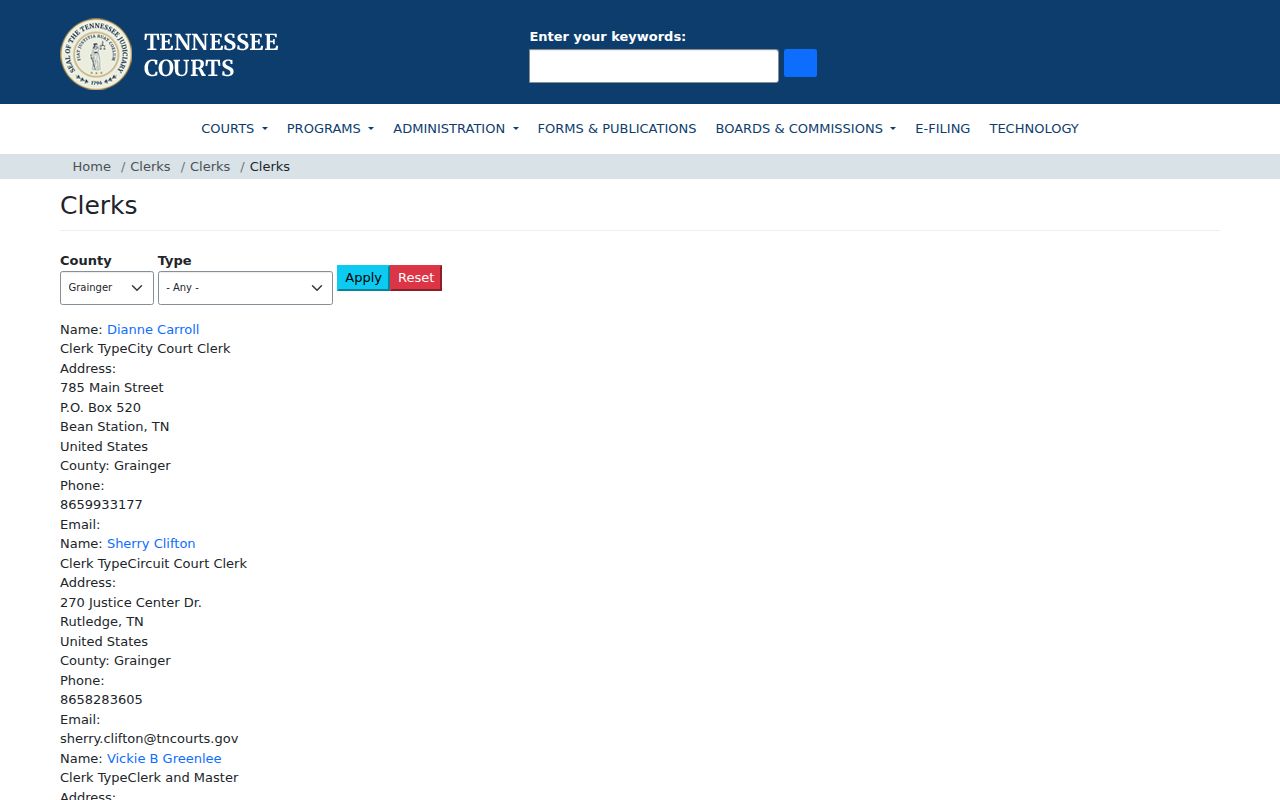
This directory view is useful when a city citation and a county prosecution could have produced records at different offices.
| Search Detail | Format | Use | Limit |
|---|---|---|---|
| Defendant name | Full legal name | Primary clerk index clue | Similar names need more detail |
| Case number | Court identifier | Direct route to one file | Must match the correct division |
| Filing date range | Approximate dates | Narrows a name search | No public local form was verified |
| Court or division | Criminal, General Sessions, or city | Finds the proper custodian | One office does not hold every docket |
| Case type | Felony, misdemeanor, traffic, or ordinance | Separates court paths | Charge class may change |
Grainger Felonies Start in Sessions
General Sessions is often the first court stop for a Grainger County felony allegation. It may hold an initial appearance, address release conditions, and conduct a preliminary stage. That does not make General Sessions the felony trial court. Criminal Court handles the felony prosecution once the matter advances through Tennessee's charging process. Misdemeanors may remain within General Sessions jurisdiction.
This split explains why a person may find more than one case number or docket stage tied to the same event. Ask the clerk whether the record was bound over, indicted, dismissed, or retained as a misdemeanor. Do not treat the first charge label as the final outcome. The Grainger County case file should be read through its last signed order.
The Fourth Judicial District Attorney's official profile identifies the prosecution office serving Grainger County.
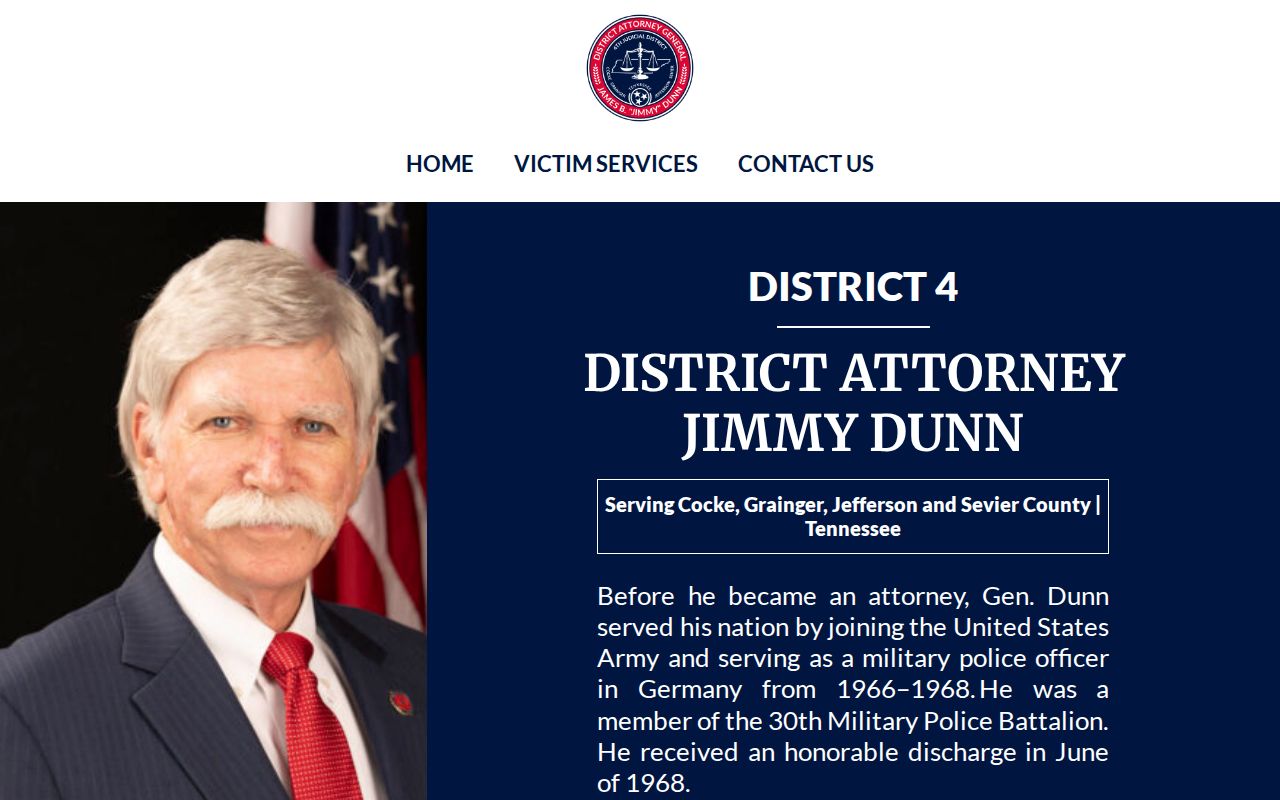
The district attorney's Grainger office is in Suite 112 at the Justice Center, but the clerk remains the proper source for the public court docket.
Inside a Grainger County Case File
A Grainger County criminal case file organizes litigation by court and case number. It may contain the formal accusation, hearing settings, counsel entries, motions, plea or trial events, judgment, sentence, and costs. Each count can have its own disposition. Read charge rows one by one rather than assuming the status of one count applies to the whole case.
| Case Number and Court | Identifies the division, filing, status, judge, and docket. |
|---|---|
| Charging Document | Shows the complaint, warrant, bind-over, indictment, or other filed accusation. |
| Docket Entries | Lists motions, settings, orders, pleas, trial events, capias entries, and recalls. |
| Hearing Dates | Shows the date, type, time, and location when public. |
| Disposition and Judgment | Records dismissal, nolle prosequi, acquittal, plea, verdict, or other outcome by count. |
| Sentence and Conditions | States the court-imposed term, probation terms, fines, costs, and related orders. |
Victim details, juvenile material, medical data, personal identifiers, and sealed or expunged matter may be omitted or redacted. A missing field is not proof that no underlying document exists.
Grainger Dispositions in Plain Terms
The disposition is the result for a charge, not just the last date visible on a docket. A dismissal ends that charge without a conviction. Nolle prosequi means the prosecutor chose not to proceed at that time. An acquittal is a not-guilty result. A conviction follows a guilty plea or verdict. Diversion is a structured path that may allow dismissal if its terms are completed.
- Arraignment
- The court appearance at which the charge is addressed and a plea is entered.
- Capias
- Court process directing that a person be brought into custody, often after a missed setting or judgment.
- Judgment
- The formal court order that states the adjudication and sentence.
- Docket
- The time-ordered list of events and filings in the case.
A TBI repository result can lag behind a signed Grainger County judgment. If the state record and clerk file disagree, obtain the clerk-verified disposition and use the agency correction path.
How a Criminal Case Moves
The court record grows as the prosecution moves. A charging document begins the filed case. Arraignment records the plea. Pretrial entries capture settings and motions. A plea or trial resolves the contested charge, followed by a disposition and, when guilt is established, sentencing. Some felony matters start in General Sessions before the Criminal Court docket opens.
Case flow: Charges Filed › Arraignment › Pretrial › Plea or Trial › Disposition › Sentencing
The sequence is a record map, not a promise of timing. Continuances, multiple counts, a grand-jury stage, or later violation proceedings can add entries. Always read the whole docket through the latest signed order.
Grainger Appeals Use Case History
Tennessee's Public Case History is a free appellate search for Supreme Court, Court of Appeals, and Court of Criminal Appeals matters. It is not a statewide Grainger County trial docket. Use it after a local case has produced an appeal, and keep the appellate file distinct from the pleadings and exhibits maintained by the trial clerk.
The Public Case History search is the official appellate lookup channel.
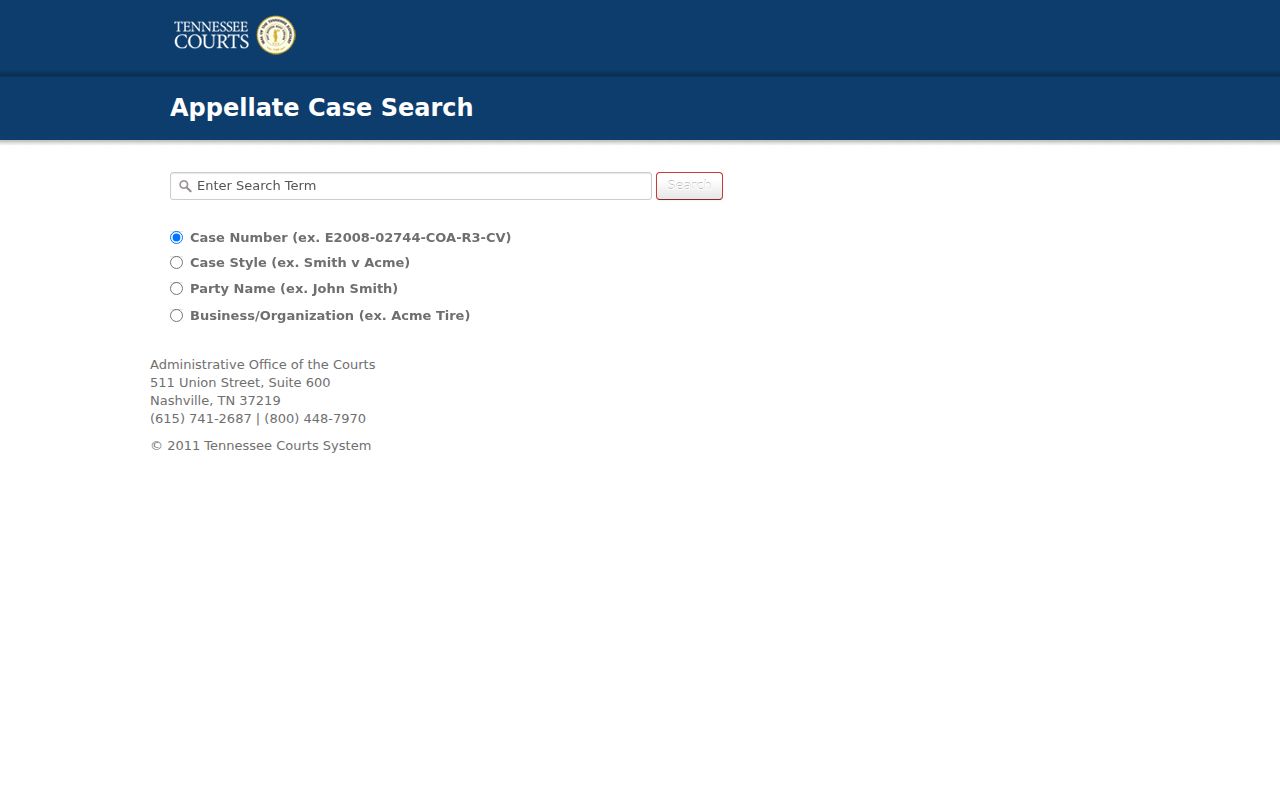
The interface can confirm an appellate matter, while the Grainger County clerk remains the source for the originating trial record and signed trial judgment.
Grainger Federal Cases Use PACER
A federal prosecution tied to Grainger County belongs to the U.S. District Court for the Eastern District of Tennessee. It will not appear merely because a reader called the Grainger Circuit Court Clerk. Federal dockets and documents use PACER, which requires an account and may assess fees under the current federal schedule. Sealed records and protected identifiers remain unavailable. The Eastern District of Tennessee website identifies the federal court and its services.
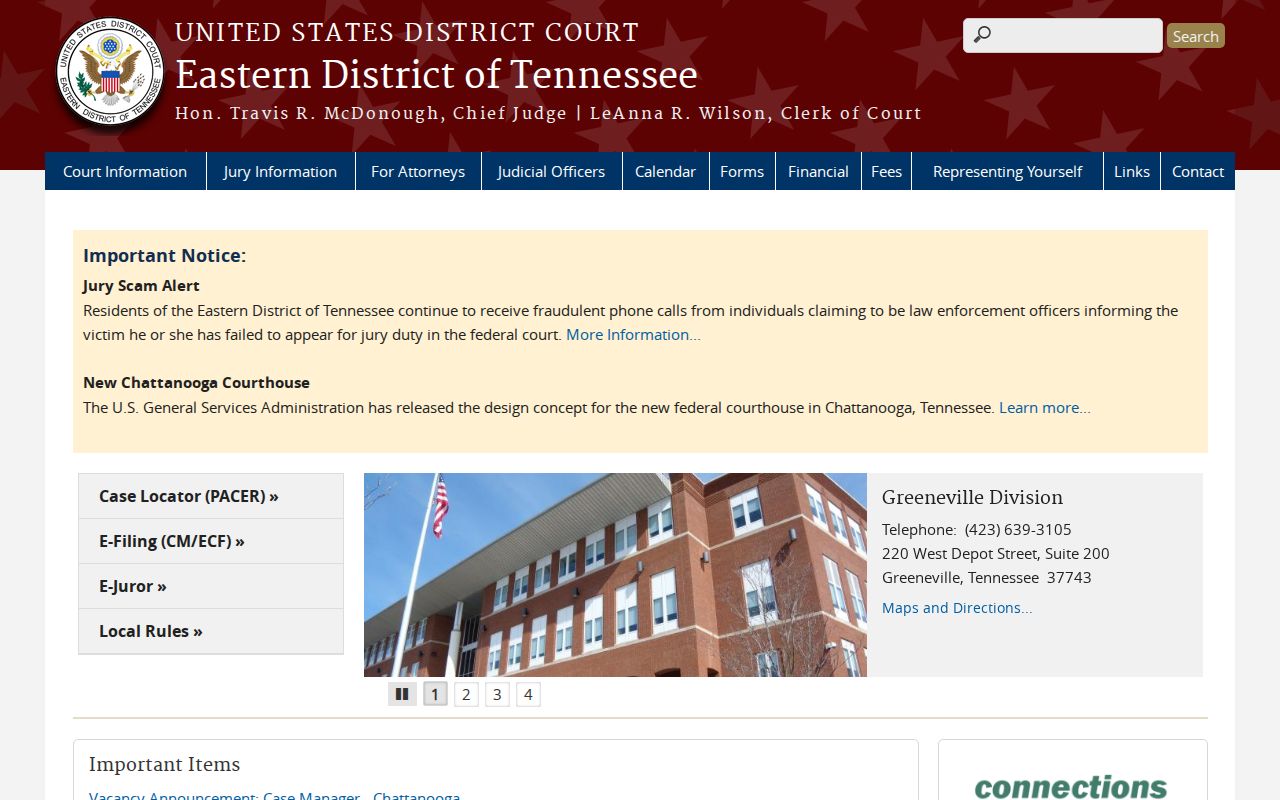
This federal court source helps confirm jurisdiction before a reader spends time asking a Grainger County clerk for a file held elsewhere. The PACER case search system provides the federal docket channel.
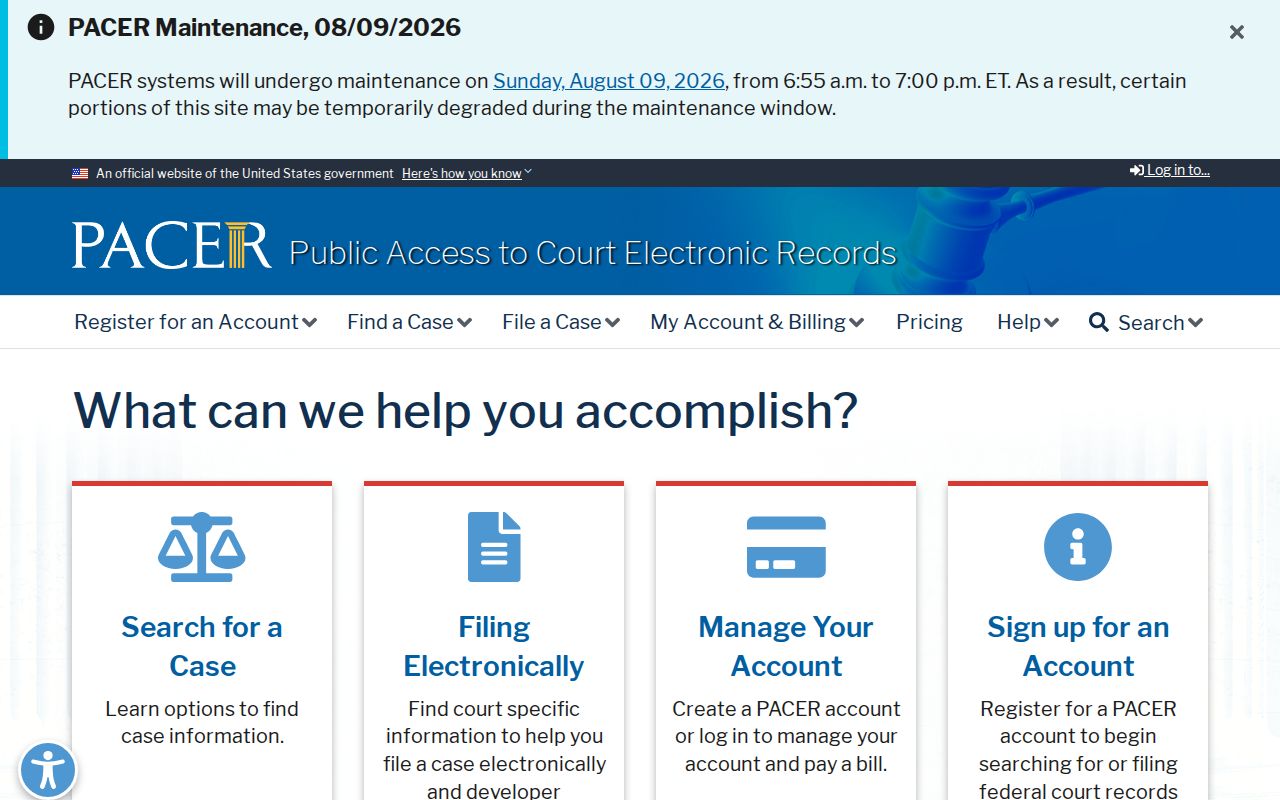
The PACER view belongs only to federal cases and should not replace a local Grainger County criminal court case request.
Case Record Access & Restrictions
The Tennessee Public Records Act gives access rights to many government records, but court access also follows judiciary rules and laws that protect specific material. Tenn. Code Ann. § 10-7-503 addresses inspection and custodian duties, while § 10-7-504 covers confidential categories and § 10-7-506 addresses copies. Active investigations, juvenile records, victim-identifying details, medical facts, and security-sensitive content can be withheld or redacted.
If a Grainger County case does not appear, ask the clerk to search the correct division and date range. The file may be old, indexed under a different name, moved from General Sessions, restricted by law, or processed after expungement. Ask for the legal basis when access is denied and narrow the request to a specific public docket, order, or judgment.
Note: A court summary is useful for orientation, but a signed or certified judgment is the stronger source for a final Grainger disposition.